Claudia's Blog

Low pressure? No pressure…

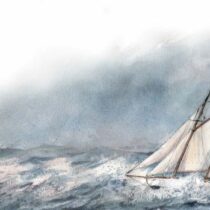
It’s hard not to take weather personally.  I know it’s pure coincidence that June’s hot spell lasted long enough to get ‘Torhilda’ painted, varnished and slipped gently back into the wet stuff at Llanion boatyard.  She had just settled prettily on her new mooring when the first low pressure system of the summer revved up over the Atlantic and swooped, wet and windy, accompanied by all its gale-infested little friends.  Trip to North Cornwall – cancelled.  Charts and tide tables put to one side.  Perhaps August will be brighter, we say, ever hopeful.   Why do we have a hobby that takes all our available cash and time and that we hardly ever get to do?  That’s a rhetorical question, as any boat owner will tell you. 

Living in a house looking at the forecast on the internet makes you cautious, but if your boat is also your home, you take the weather in your stride.  In the days when I lived on board my 24′ gaff cutter, it was a lot easier to get on with in and not spend too much time fretting over isobars.  I recall a windy trip up channel in ‘Kitty’ one year, coming back from the festival of sail in Brest and setting off from Weymouth, more or less happily, with a force 9 blowing.  Not as mad as it sounds, as the wind was behind us, it was a short coastal hop and the gale was due to ease by the time we got into the shelter of the Solent.    Dealing with rough weather when you’ve already got your sealegs is much easier than sitting indoors with the wind rattling the windows and deciding that you can’t possibly sail today because the ironing needs doing. 

Which is why I’m always fascinated and impressed by that rare breed of sailors who deliberately put themselves in the worst conditions that the oceans can throw at them – offshore racing, especially singlehanded, is as tough as sailing gets and a stark contrast to the gin and tonic pottering about that most of us do.  Sailors like Mike Golding find the extreme conditions of the southern ocean as beautiful and compelling as they are challenging.  My current book (the one everyone wishes I’d get on and finish so I stop going on about it) features a double page spread of Mike’s views on the southern ocean, a humbling and valuable perspective on one of the last true wild places on earth.  I wanted to do a picture of ‘Ecover’, Mike’s Open 60, romping over the waves, albatross in attendance.  It took a few attempts but I got there in the end. 

Back to my world of reading, drawing, researching, writing, singing and dreaming about the sea in all its forms.  Perhaps I should throw buckets of cold water over my head for more authenticity… or go sailing more often, perhaps.   I’ll work on it.

Watching paint dry

If you’re not into watercolours I recommend a click of the mouse now before your eyes glaze over.  For those who find sketching outdoors strangely exciting and challenging, here’s another of my colour mixing rants.  It was the last day of term today for my art classes, and it’s become a tradition to escape the classroom and spend the time sketching in Llawhaden castle grounds.  Sketching outdoors refreshes the parts that copying photos can’t reach, as well as waking up your colour sense.  How do you paint a stone wall?  Is it light or dark?  Warm or cool?  It’s usually all these things, speckled with white patches of lichen just to make the task even more tricky. 

Letting patches of alizarin, cobalt and raw sienna blend on the page gets you the soft mixed shades of old stone.   Other variations of the three primaries could be used to get similar effects.  More blue in the shadows, more sienna in the sunny spots.  Plenty of white patches of paper left exposed for the lichen.  In the studio you can see what you’re doing, tubes are clearly labelled and there’s a nice big white palette (cunningly disguised as a ten pence white china plate from a charity shop) to mix puddles of colour in.  But when you’re sitting on a wobbly stool with the wind blowing and your pocket paintbox on your knee, it’s not so easy, especially when you look at the range of colours in the average ‘beginners’ sketching boxes.  Gill had 24 colours in her box, most of them unused and unusable.  Four shades of insipid pink, 4 blues all very similar but no windsor blue.  Umpteen sludgy browns, all indistuingishable.   Give it to your grandchildren and start again, I said.  You need the same colours in your field palette as you do in the studio, otherwise you might as well mix your colours blindfold.  Get half a dozen artists quality half pans in a paintbox and give yourself a chance.  The more limited the colour choices, the better your chances of consistency and remembering which colour does what.  Sketching outdoors is challenging enough, what with wind, weather, nowhere to put stuff, tourists getting in the way, getting a numb bum sitting on rocks, and insects landing on your sketchbook.  It’s tough out there, folks. 

So if all those pretty paintboxes with their dozens of obscure colours are all hitting the bins tonight, it’s all my fault.  My own paintbox is messy, but it works.  It’s still got more colours in it than I tend to use, but generally it’s easy to plonk the brush in roughly the right place when working at speed. 


Colours most used?  Raw sienna, cobalt blue, windsor blue, ultramarine, alizarin, aureolin, light red, cobalt violet, cadmium yellow.  So that’s two reds, two blues, three yellows and a voilet.  The palette could do with a wash, though, couldn’t it.  Glass of wine first, I think.

Thinking with a pencil

My studio table and floor is disappearing under pieces of paper and chapter five is well under way.  Writing and illustrating a book has its own pace and momentum; you have to keep a part of your brain connected to it or it’s hard to pick up the threads again.  On the other hand, twelve hours at the drawing board (including umpteen cups of tea, hanging out washing, raids on the kitchen and periodic dips into facebook of course) are about as much as I can manage.  As well as being immersed in all things to do with rivers, lakes and reservoirs, the first few chapters are now coming back from the typesetters for editing.  I have an ambiguous view of seeing the proofs, my haphazard layouts transformed into professional looking pages.  Just don’t ask me if it’s any good or not, I haven’t a clue!  Encouraging phrases from publisher and consulting editor ping into my inbox from time to time, so I’m assuming I’m on the right lines. 

Here’s my take on how salmon are able to find their way home from the Atlantic to their home river:  Caption is ‘Right, what’s our postcode?’

Meanwhile, my Wednesday art class has a few weeks to go until the end of term so we’re spending time drawing outdoors for the last few lessons.  This week a good time was had by all in Sandy Haven.  Everyone says they find sketching from life daunting, but the results were so much fresher than labouring to copy a photo, in spite of challenges like the strong breeze and bright sunlight.  Mike had an unusual obstacle to overcome whilst sitting sketching a bank of wild daisies.  A family of six came and sat between him and his scene, laid out a rug and had a picnic, obscuring his view without appearing to notice he was there.  That’s a marvel in itself; Mike is a tall and imposing presence and had never experienced total invisibility before.  Challenges aside, a good time was had by all -  call me single minded but you can never do enough drawing.   Sketching, after all, is just thinking with a pencil.

That’s enough – brain is not firing on all cylinders tonight, must have used up today’s store of wit and creativity in silly salmon cartoons and duck jokes.  Glass of wine, anyone?

Dancing in the rain

‘Life isn’t about waiting for the storm to pass. It’s about learning to dance in the rain’.

Many blogs ago I mentioned our friend Ken Roberts who was setting off on a solo round the world cycle ride.  We’re still following Ken’s progress on www.acrosscontinents.org and his blogs are becoming more perceptive and fascinating all the time.  At the moment, on the brink of entering China, he has been visiting countries that most of us have never heard of or, if we have heard of them, have no idea where they are.   Many of them are torn apart by political corruption or civil unrest; none of them feature in holiday brochures, and most of them end in ’stan.  Through the middle of all of this pedals a lone Englishman, wrestling with visas and bureaucracy, unreadable roadsigns, unkept roads and extreme temperatures.  What it most striking, though, is not the expected obstacles that he faces, but the kindness of strangers.  Wherever he goes people feed him and ask no payment, help him out, offer hospitality.  Ken talks in his blog about the ‘many individual acts of generosity, the extent unimaginable in supposedly more developed nations ‘.  It gives you faith that humanity, one to one, has a connection and warmth that goes beyond nationality or language and belies the world view that the newspapers would have us believe, that the world outside our garden gate is a dodgy place.    Perhaps it confirms the view that life is a mirror to your attitudes; if you expect strangers to be friendly, they will be.  If you expect fear and hostility, that’s what you’ll get. 

Anyway, the blog is worth a look.  It also makes me realise how quickly we have come to take worldwide internet connection for granted; a few years ago we’d have had to make do with the occasional postcard.  It will be interesting to see how far the regular updates continue once Ken is in deepest China.

I think I become more interested in other people’s travels when my own adventures are mental rather than physical.  Yes, I’m still totally immersed in my RYA marine conservation book, which for a butterfly brain like mine is a major struggle.  More than halfway through now, just finished the chapter on coasts and beaches, so next up is rivers and lakes.  Apologies to all my facebook friends who have to put up with my regular rants when I get stuck and need to let off steam.  The next month or so will see the bulk of the work done, after which I am looking forward to a few days’ sailing, if the weather lets us and if I can remember how!   I did enjoy researching rockpools, though.  New knowledge makes you look at everything with fresh and more appreciative eyes.

Read any good pictures lately?

“A painting”, said a visitor to my studio as he pondered which picture to buy, “is a conversation”.  He chose the one, I guess, that spoke to him most eloquently, and I hope the dialogue is still continuing whenever he looks at it.  It’s true that the most effective paintings are those which leave something for the viewer to do, or leave something to the imagination; one brushstroke is worth a thousand – if it’s the right brushstroke.

I don’t mean that detailed paintings are always dull.  I used to paint ridiculously detailed miniatures after all, and I think they evoked a different kind of dialogue, drawing viewers into another world.  But however well a painting engages the viewer, it’s nothing compared to the Victorian view of art.  I went to a NADFAS lecture on Victorian Narrative Painting by Lizzie Darbyshire, a brilliant revelation on how to ‘read’ Victorian art, paintings which were designed in every detail to reflect and reinforce the values of the day.   Art was big business, and viewers expected to be able to read a painting like a book. 

One example, ‘The London Visitors’, by Tissot, shows a well dressed couple standing on the steps of a London landmark.  So far, so dull.  But the critics of the day were shocked.  The lady, it seemed, was not as ladylike as her appearance suggested. Why?  Because her eyes are staring out of the picture at the viewer, rather than cast down demurely and attending to the guide book her husband is browsing.  Ladies, apparently, did not make eye contact with men.  Her reputation is further tarnished by a small detail in the corner of the painting which we didn’t notice until it was pointed out – a cigar, lit, partly smoked and then thrown down on the step.  This, according to the Victorian mind map, meant only one thing; the lady had been flirting with a stranger.  This is a huge mental leap for us, but perfectly logical for the customs of the times, which dictated that a gentleman does not make approaches to a lady with a cigar in his hand.  Search for ‘London Visitors’ on google images if you want to see for yourself.

Enough of the history lesson, but it’s interesting to see how our visual shorthand has changed over a century.  These days we are as familiar with the icons used on computer screens as the Victorians were with their visual moral messages.  My own paintings usually have to tell a story – book illustrations for one, and cartoons for another.  The style couldn’t be more different from the classical style of Tissot, but I think that our pleasure in a good cartoon is because we can read it like a comedy sketch.  Here’s one I did for Practical Boat Owner a while ago (I can’t show you the latest one because it’s not out yet!)

selby-boat-grub

I can’t remember the caption for this one… and you’d need to read the Dave Selby article it was attached to, but hopefully you get the drift!  Here’s another, more recent, to go with a hilarious article about crossing an ocean with a parsimonious skipper.  I think the caption for this one was ‘Dave would have plenty of time to regret eating that third weetabix’.

selby-weetabix-low-res


I’m so glad I’m not a Victorian artist.  Apart from the inconvenience of all those corsets and dresses, I don’t think I could do ‘demure and laydlike’, and I would so much prefer to make people laugh, or at least smile, than preach moral messages!

Henry’s rocky cove

In August 1485, so the story goes, Henry Tudor sailed over from exile in France and landed at Mill Bay in Pembrokeshire.  Gathering support along the way, he then stomped eastwards, beat up Richard III in the Battle of Bosworth and crowned himself Henry VII.  The rest, as they say, is history.  Now, here’s the question – why did he land in Mill Bay?  We know why he landed in Pembrokeshire; because he was born in Pembroke Castle and wanted to gather men from Wales as he marched, and the English were keeping a watchful eye on the south coast in case he tried to sneak in that way. 

Mill Bay looking southeast out of the haven

Mill Bay looking southeast out of the haven

I went to Mill Bay last weekend, a pleasant half hour stroll along the coast path from the car park on St Ann’s Head.  It’s the first cove on the left as you sail into Milford Haven.  The path dips down to the cove where a small valley tips a stream onto a rocky foreshore.  You could land a small boat there, but I’d only attempt it in a very flat calm; negotiating the rocks and finding a flat piece of sand to beach would be tricky.  Perhaps there was more sand in Mill Bay in the 15th century.  Perhaps there was a stone pier.  But it’s still an odd choice, as another half an hour’s sail brings you to the glorious sheltered bay of Dale, which is about as perfect as an anchorage and sheltered landing place could be, and would have saved the would-be monarch from an hour’s tramp along the cliffs.  Apparently he sent some of his ships round to Dale, but he preferred to be put ashore at Mill Bay.  I bet he got his feet wet.

Even more sensible than Dale would have been to save another day’s march and take the tide further upriver, to his birthplace at Pembroke perhaps, or to Milford.  Even if the wind was unfavourable, the tide would have carried the fleet upriver very efficiently.  Perhaps he had a girlfriend on St Ann’s Head.  Perhaps he’d had enough of being afloat and was desperate to get ashore.  Perhaps nobody knows, but if you do, please let me know.  It’s always interesting to look at history from a seafarer’s point of view.


St Anne's Head - design for a postcard of Dale (not quite finished!)

St Anne's Head - design for a postcard of Dale (not quite finished!)

If Henry’s ship’s log was still around, I’d love to see it.  And talking of log books (ouch, what a contrived link!) and with a leap of imagination back into the 21st century, my newly designed Log Books for Little Ships are back from the printers – have a look at www.starfishbooks.co.uk for the details.  When I say the books are back from the printers, what I actually mean is that my studio floor has disappeared under several dozen boxes of pages and covers, so there’s just the small business of collating and binding them.   In the meantime I’m stepping over boxes to get to my drawing board.  Ho hum…

In the mood for colour


More on the watercolour theme this week as I’ve been teaching colour theory.  It may not sound that exciting, but I’m easily pleased and love the way that you can take three bright primary colours and make a colour wheel (or in this case, colour splodge…..)

 
three primaries 
 

and then the most clever bit of all, mixing three bright primaries together and ending up with the softest dappled grey…..

 gorgeous greys

Careful with the red.  Red is a bit of a bully and a little goes a long way.  The secret to a dappled colour is to let the paint mix on the page, don’t stir it into a homogenised gloop on the palette.  Where damp colours touch they’ll do their own thing.  Here’s a one minute seascape…..

instant seascape

How’s that for a very potted colour theory lesson!  Blended greys are so much nicer than tube greys.  If you want to mix some gorgeous dark greys and blacks, try cadmium red plus winsor blue or burnt sienna plus ultramarine.  Too brown?  Add more blue.  Too grey?  Add more red.


What’s on top of your wardrobe?


The snow melted, and the pace of life returned to a gallop.  Watercolour classes have begun at Haverfordwest Community Centre, with ten beginners in the morning and 13 improvers in the afternoon.  Most of those in the improvers class are returning from last year – does this mean I didn’t do a good enough job of teaching them last time so they have to come back and hear it all again?  Actually, I think (I hope) they’ve come back purely for fun, because it keeps the momentum going and they learn as much from each other as they do from me.  It can be hard to find inspiration when you’re sitting alone in front of a blank sheet of paper.


letting the paint, paper and brush do their own thing...

letting the paint, paper and brush do their own thing...


Beginners are a joy to teach because you get results fast when you start learning something.  Watercolours have a reputation for being difficult, and they can be, but the basics are easily learnt with someone looking over your shoulder to make sure you’re not lathering it on like emulsion paint and then wondering why your washes have turned up their toes and died.  Norfolk artist Aidan Kirkpatrick once told me ‘If you’ve found a paper, you’ve found a style’, which sounds dramatic, but it is amazing the difference a good watercolour paper can make.  The problem is persuading students to experiment with decent paper as they don’t want to waste it.  
 
Two years ago one of my students, Gill, bought some lovely Arches NOT paper; the sort of paper that turns a simple brushstroke into a thing of beauty.  It was quite expensive – well, the price of a half decent bottle of Chardonnay, my measure for everything  – but not as pricey as, say, the truly wonderful Two Rivers hand made.  Some months later I asked how she’d enjoyed using the Arches.  “Oh, I haven’t used it!”  she said.  “It’s on top of the wardrobe.  I’ll use it when my painting has improved enough to justify it”.  In vain I tried to explain that her painting would be sure to improve IF she used the paper, but I think it’s there still.   I now have to explain to newcomers the difference between cheap practice paper and top-of-the-wardrobe paper.    I’m sure I get more from my students than they do from me!
 
fast and sketchy...

fast and sketchy...


Jigsaws, mince pies and walks on the beach

Nice things about Christmas:  Being able to have a glass of wine at lunchtime without feeling guilty.  Jigsaws and mince pies and walks on the beach.  Listening to sublime singing in a tiny church by candlelight (ancient Welsh carols sung unaccompanied by a raven haired young vicaress, but that’s another story….).  Things I don’t like about Christmas:  Too much chocolate.  Icy weather.  Feeling guilty because for the first time ever I didn’t send Christmas cards this year.  Trying to get back into work mode again afterwards.  I’m easing back into it again gently by sorting out paperwork and filing today, which always leaves me with a table full of bits of paper that don’t fit anywhere, books of raffle tickets I never got round to buying and  letters I never replied to.

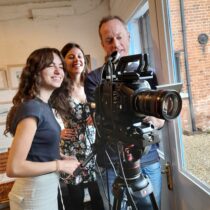
The next task is to give some thought to teaching, with two new classes starting next week at Haverfordwest.  My family are working towards getting me to do some video demonstrations to put on the website.  Hey, I’m only just getting my head round keeping a blog, but I’ll give it a go.  Soon.  If we can get the technology right.  One thing I like to do in teaching is debunk the myth that talent is all.   You may have it or you may not, but without hard work and technique, you’ll get nowhere.    Talent is the cherry on the cake, but without the hard work, there’s no cake.  Quick-result talent shows on tv fascinate us because they seem to imply that it’s all about talent, and there’s no need to do the hard work.  We don’t really want to be reminded that there’s a long road to travel when we’re so focussed on the destination!

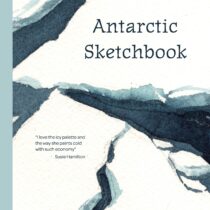
Finally…. I’m going ahead with the sketch book idea talked about many blogs ago…. here’s the revised front cover:

  A5 sketch book - with drawing tips!

A5 spiral bound sketch book – with drawing tips!  Available March

I’ll admit it…. it’s December

silent-night

I’m not very good at winters.  From September onwards I wear so many layers of clothes that getting dressed in the morning takes ages, but I’m still permanently cold.  Bracing walks after a day at the drawing board are out of the question because it’s gone dark by then – and is usually raining too.  And I’m one of those grumpy people who hates any mention of  Christmas before December and I shout at the radio when they wheel out the cheesy Christmas pop songs.  I’m either turning into a grumpy old woman or I’m just a bit short of sunlight and vitamin D!

But now it’s mid December I’ll admit it, Christmas is imminent.  I can tell because I spend most of the time doing a wide variety of bits and pieces instead of getting stuck in to one big project.   There are Christmas commissions (this week including a wooden name plaque for a boat, a portrait of a Dunkirk Little Ship, and a sketch of a pilot cutter), as well as stocking up galleries and helping Perry sort out online orders.  Talking of  Christmas galleries, here’s a reminder to all you east coast dwellers to visit that unique emporium of all things nautical, Salty Dogs, brainchild of the inimitable Den Phillips.  This year it’s at 57 High Street Maldon so pop in if you get a chance; it just gets better each year.  Another east coast gallery I’m topping up for Christmas is the delightful Sea Pictures Gallery in Clare, Suffolk – not near the sea but that means all the more reason to buy seascapes!  Meanwhile, back here on the west coast I nipped over to Cardigan today to drop some work in at Frame byFrame, run by the inspirational Chloe and Emma. 

After new year I’ll change hats and be an illustrator again, but for the moment it’s good to make more space in the studio and get stuff out there.  Actually, in January I’ll also have my tutor’s hat back on as I’ve a full two classes of keen students waiting for me on a wednesday in Haverfordwest.  Great fun.

The image  above is called  ‘Silent Night’ and it’s one of the Christmas cards I designed for the Nancy Blackett Trust (www.nancyblackett.org).  Unsurprisingly, I don’t do winter sailing, but I know there are those that do!  Which reminds me, good luck to Geoff Holt setting off on his Atlantic Challenge today.  The lengths some people will go to to get some sunshine….. (www.geoffholt.com)